
The Law 251 Podcast
Episode 01 October 21, 2026
The Insurance Company Playbook After an Accident
Bryan Comer explains common insurance company tactics after an accident, from broad medical releases and recorded calls to lowball offers and stalled claims.
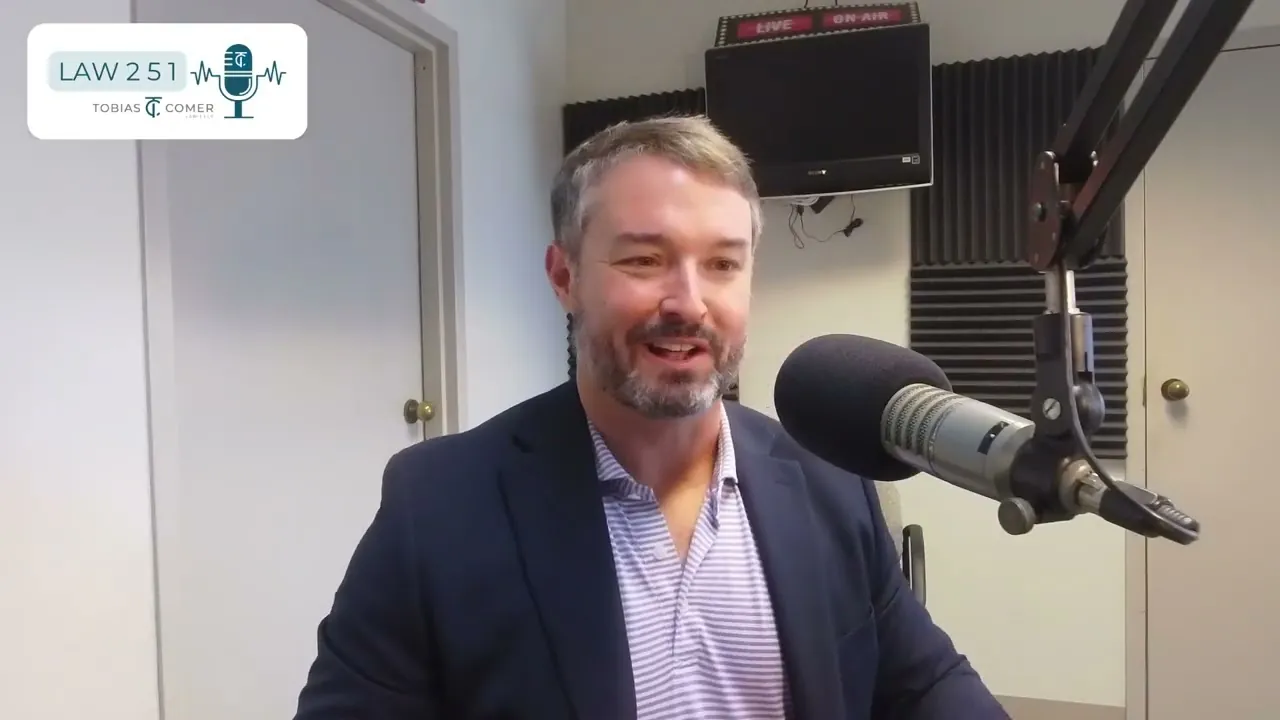
Original recording
Watch or listen to this episode.
This episode opens on the original third-party recording platform in a new tab.
Watch episode on YouTubeFrom the original episode page
Episode notes
Bryan Comer of Tobias & Comer Law joins Mobile Mornings on FM Talk 106.5 to talk about the tactics insurance companies use after an accident or injury.
He explains why evidence matters early, why you should be careful with broad medical releases and recorded phone calls, and what lowball offers and stalled claims can look like.
Listen to the latest episode of Law 251.
Accessibility
Transcript
This transcript was prepared from the original episode audio and lightly edited for readability.
Dalton Orwig: Welcome back to Mobile Mornings on FM Talk 106.5. It's a pleasure to bring in Bryan Comer with Tobias & Comer Law. Yes, it's time for another edition of Law 251. Good morning, Bryan.
Bryan Comer: Good morning. Thanks for having me.
Dalton Orwig: You always bring great stuff for us to discuss, and I'm always learning something new. I'm really interested in the topic you brought this morning: some common tactics used by insurance companies and others after an accident or injury to try to get you to do something that works out in their favor. You know all the tricks of the trade at Tobias & Comer Law, and you know what to look for. So let's start broadly. When someone files an injury claim, what are some of the tactics you commonly see insurance companies using?
Bryan Comer: It actually starts before the claim gets filed. People think of a claim in terms of, okay, the crash happened, or the event happened at my house, or whatever. In our experience, when an adverse event happens, the machinery on the other side goes into action. Some of that is for good reasons. I'm not saying it's all nefarious. There are quality assurance investigations when something happens at a hospital or a medical office, to figure out how to make sure it doesn't happen again. That's not what I'm talking about. I'm talking about situations where a trucking wreck happens and the insurance company gets its lawyers to the scene while the people are still at the scene of the crash. They go into motion immediately. We've talked before about the need to contact us quickly so we can collect evidence, because the other side is 100% doing that.
Dalton Orwig: For these big companies, they have a team on standby, more or less. Someone who isn't expecting to be injured doesn't have that team on standby. But it's nice to have a plan just in case.
Bryan Comer: The bigger companies, like the delivery companies we've talked about, have entire risk management protocols because they have so many delivery trucks trying to get those two-day deliveries out. They have a plan in place for when something happens. This isn't to say that if you've been in a wreck, you should immediately think about bringing a claim or filing suit. But if there is a substantial injury and a substantial crash, you want to make sure everything is gathered as quickly as possible. At a crash site, the physical evidence, like skid marks and glass patterns, can show a lot while it's fresh. Over time, that can be lost.
Dalton Orwig: We're talking with Bryan Comer of Tobias & Comer Law for Law 251. What about records the other side asks for, whether it's insurance companies or delivery companies? Do they ask for medical records from someone involved in an accident? What kinds of things might they ask for, and what should you be on the lookout for?
Bryan Comer: We've seen this a lot. Sometimes it's under the guise of, "To evaluate your claim, sign this medical authorization." They say they want the records for this event, whether someone got hurt on somebody else's property or in a crash. But the insurance company can send a release that's broad enough to get much more than those records. We're not just talking about your visit to the orthopedist or the emergency room. We're talking about potentially your entire medical history, with the idea that they'll use it to say, "This back injury isn't from this crash. It's from some preexisting condition." That may or may not be true, but the release is a lot broader than it looks. I'm not saying everybody does this, but we have seen it in practice with our clients.
Dalton Orwig: I know you've worked so many cases over the years that you have stories like this ready to go. Some people think, "The insurance adjuster will be the middleman. They'll figure it out." Is the adjuster looking out for the injured person's interests, or is their responsibility ultimately to the insurance company?
Bryan Comer: I'm not going to say every insurance adjuster is evil or anything like that. I know people who work for insurance companies, and they're great people. We've worked with some really good people here locally. But at the end of the day, the adjuster is there to adjust the claim for the carrier and limit the carrier's exposure. That's true even when it's handled in-house. A lot of bigger companies are self-insured, so they don't use the third-party carriers you see advertised during college football season. They handle claims in-house, but the adjustment of the claim works the same way. Whether it's in-house or a third-party insurance company, they're trying to minimize the payout. That's why they look for any reason to reduce the claim: "This is a preexisting problem," or "You were really at fault," all before we ever get involved in the case. The main thing I want people to understand is that if something like this happens, it's important to call somebody. Call us, and let us take that off your plate. Also, be wary of anything you sign. Is it a release that seems harmless, like a medical release so they can get records? Or is it a release of the claim itself? Something like, "Here's a check for pennies on the dollar. Sign right here and we'll hand it to you right now." Just be careful about what you're presented with.
Dalton Orwig: Speaking of that, if they get you on the phone after the accident and say something that seems routine, have you seen them get the injured person to make a statement they didn't realize they were making? They start with, "How are you feeling after this accident? We're sorry this happened. Tell us exactly how you're feeling." Not all the time, like you said, but are those some of the tricks of the trade to get someone to admit to something that isn't accurate?
Bryan Comer: Absolutely. One of the first things we do when we get involved in a case is contact the insurance company and say, "First, if there's a prior authorization, we're revoking it immediately. Second, if you have a recorded statement from our client, give it to us." I can't tell you how many times that very thing happens. They produce what looks like a transcript, with each question and answer written out. When they say, "This is a recorded line," they mean it. That recording gets transcribed and goes into the claim file. Then something that seemed harmless, like answering "How are you feeling?" or saying you probably could have prevented it if you'd been paying attention, becomes an admission they will definitely try to use against you.
Dalton Orwig: Let's talk about lowball offers. We hear that term a lot. What does a lowball offer look like in a real injury case?
Bryan Comer: Like I said a little earlier, the injuries and the facts of each case drive the value of the case. Just because somebody is injured doesn't mean they have a claim, and just because there's a crash doesn't mean somebody else is responsible. But when someone else is responsible, the facts and the injuries drive the value. Think of it like a pie chart. If we took the case the full way and developed it through medical testimony and everything else, the value of the case would be 100%. Not to get into math this early in the morning, but what they try to do is settle it for pennies on the dollar before a lawyer gets involved. They might even say, "Don't get a lawyer involved, because they're just going to take a cut." In truth, the way we handle it, we make sure we're evaluating the claim properly and staying in constant communication with the client, so they understand what we're really looking at and can make an informed decision.
Dalton Orwig: I talk so often about how you're local, and you love Mobile and Baldwin Counties and the Gulf Coast. I know that communication is paramount for you, so the client knows where everything stands. On the other side of the lowball offer, what about stalling or dragging a claim out? Why would an insurance company do that?
Bryan Comer: The longer they go without paying a claim, the longer they keep control of their money. Think of it like a bank. They can invest the money they would use to pay out the claim and earn interest on it. Every day that goes by without paying the claim is profit for them.
Dalton Orwig: That makes sense. We've probably already answered this in the 10 minutes we've been talking, but what mistakes do people make when they try to handle an insurance claim completely on their own? It's probably the list we just went through: accepting a lowball offer, or being led to admit to something that wasn't even true. Those are pitfalls the attorneys at Tobias & Comer Law know to look for, but someone handling their own case might not.
Bryan Comer: That's one of the things we tell people: "When you come to us, let us handle that end of it. Let us take that off your shoulders. You just worry about getting better." We'll negotiate if we have to or keep them at bay, revoke any prior authorizations, get a view of everything, and then advise the client on what makes the most sense. It could be, "This isn't a case," or, "That's a reasonable offer, and good luck to you." Those are the things we look into, and that's why I always tell people you're better served by having a lawyer represent you. We know what to look for in those situations.
Dalton Orwig: You certainly do. Bryan Comer with Tobias & Comer Law, thanks again for coming in. I really enjoyed this topic. So many people have been through something like this, and if you haven't, you may in the future, so it's really good information to know.
Bryan Comer: Thanks for having me.
Dalton Orwig: That's Bryan Comer with Tobias & Comer Law. If you have any questions at all, you can always call Tobias & Comer Law at 251-432-5001. That number works 24/7. Or visit their website, tobiascomerlaw.com. That does it for Law 251 today.